Office Address

123/A, Miranda City Likaoli Prikano, Dope

Phone Number

+0989 7876 9865 9

+(090) 8765 86543 85

Email Address

info@example.com

example.mail@hum.com

October 20, 2025

Elderly Fall Prevention: Home Safety Tips for Connecticut Seniors

Falls are one of the most serious threats to health and independence for older adults. For many Connecticut seniors, just one fall can affect their health, autonomy, and confidence. In 2023, more than 36,000 state seniors ended up hospitalized because of fall-related injuries, and unfortunately, 411 lost their lives. At the national level, falls have for a long time been the leading cause of fatal and nonfatal injuries for adults over the age of 65.

The good news? A large number of them are preventable. The majority occur at home, particularly on bathroom floors, downstairs, on loose rugs, or in poorly lit areas. Some easy, considerate home changes are one of the single best ways families can commit to elderly fall prevention. Putting the home safely in order isn’t merely risk-reducing; it also makes the senior individual feel safer, cared for, and empowered to live at home with pride.

Why Elderly Fall Prevention Is Important

  • More than one out of four older adults falls each year¹, though fewer than half report these falls to a healthcare provider.

  • Falling once doubles the chance of falling again².

  • Older adults are more vulnerable: individuals age 60+ in Connecticut are about 7.6 times more likely to die from a fall than younger people.

  • In Connecticut, older adults (60+) accounted for over 91% of fatal falls in 2023 and over 80% of nonfatal hospital admissions for falls³.

  • Falls often lead to serious injuries such as hip fractures, head trauma, spinal injuries, or a decline in mobility and autonomy.

Because of these risks, every Connecticut household with an elderly resident should proactively incorporate fall prevention strategies into their safety plan.

Common Risk Factors for Falls

Understanding risk factors helps you know where to focus your efforts:

  • Muscle weakness, balance issues, gait changes – age-related decline in strength and stability is a major contributor
  • Vision or hearing impairment – reduces spatial awareness and responsiveness
  • Medications – some drugs (or combinations) cause dizziness, drowsiness, or low blood pressure with standing
  • Foot problems or poor footwear – including loose shoes, slippers, or shoes without traction
  • Home hazards – clutter, loose rugs, cords, dim lighting, slippery floors, uneven surfaces
  • History of prior falls – having fallen before is one of the strongest predictors of future falls

Home Safety Tips: A Room-by-Room Guide for Elderly Fall Prevention

The following are some home implementation practices for fall prevention:
General & Entry Areas

  • Clean up clutter, wires, shoes, or other obstructions from pathways and stairs
  • Secure or remove loose rugs; install non-slip backing or remove them for good
  • Provide decent lighting for hallways, entrances, stairs, and corridors
  • Install nightlights in bedrooms, bathrooms, and hallways
  • Maintain daily necessities (keys, glasses, remote, cell phone) at arm’s length

Stair And Step

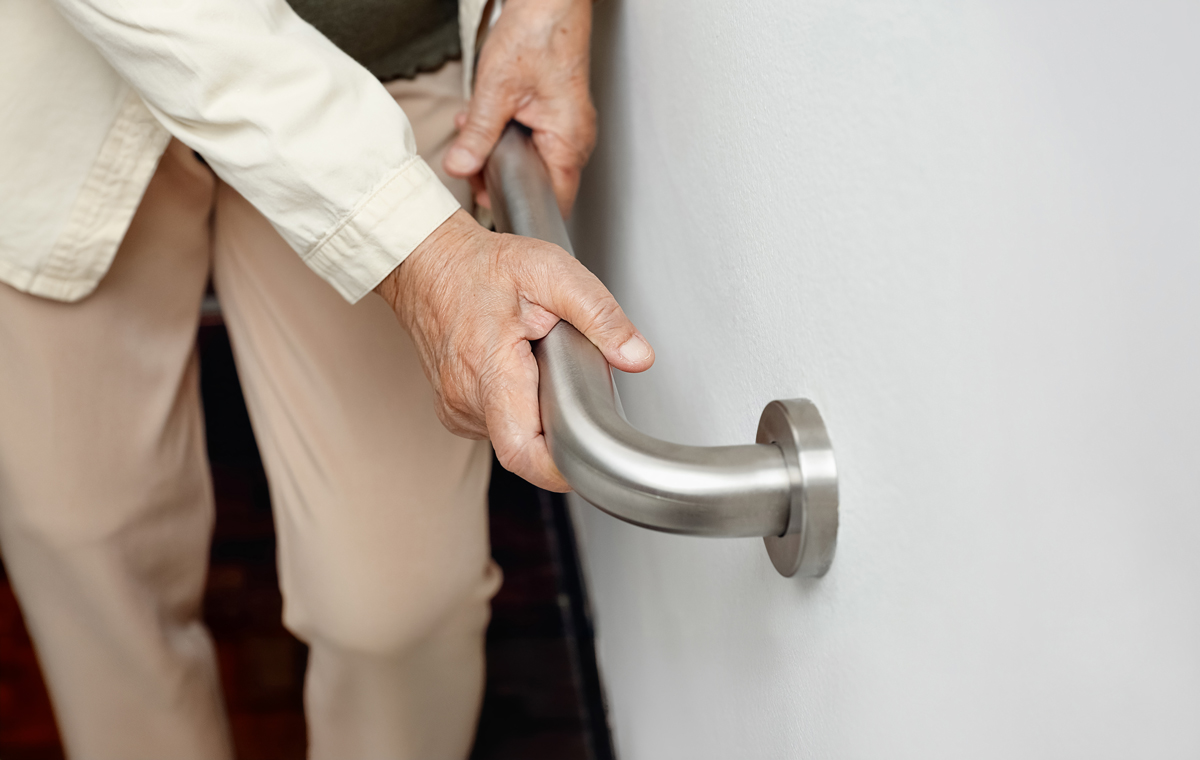
  • Install strong handrails on both sides of the staircases
  • Repair broken or uneven steps or surfaces
  • Apply contrasting color strips or striping on step edges
  • Repair or abate loose floor coverings or carpeting that could catch

Bathroom Safety

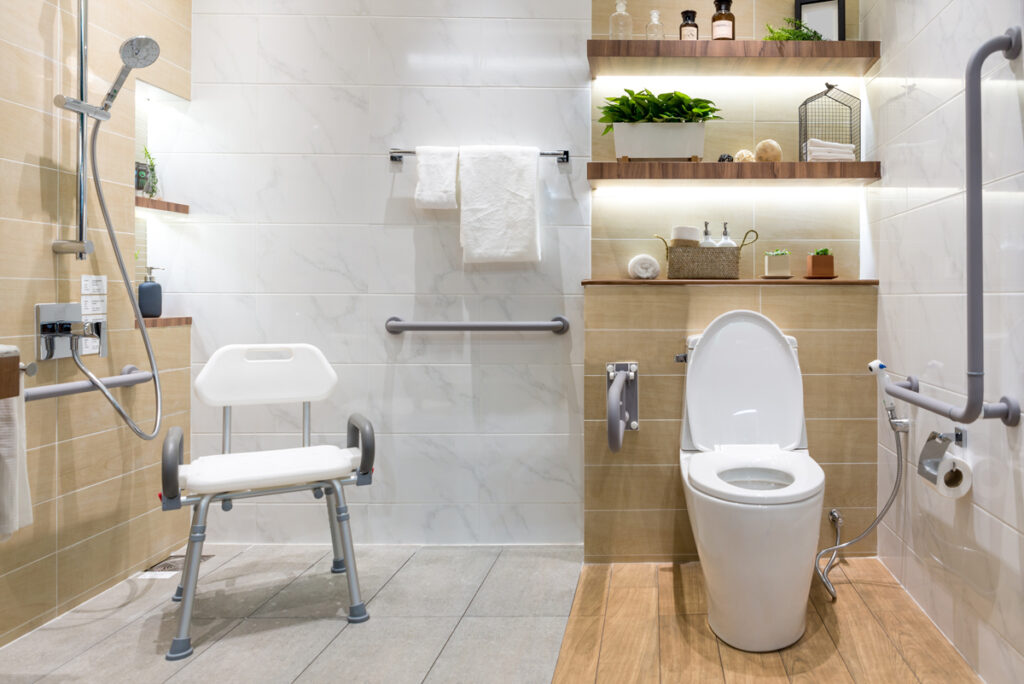
  • Install grab bars close to the toilet, tub, and shower
  • Non-slip mats or adhesive strips for baths/showers, floors of bathrooms
  • Think about a shower chair or bench and a handheld shower unit
  • Raise the toilet seat height or fit grab supports
  • Provide sufficient light, and ensure switches are conveniently accessible

Kitchen and Living Areas

  • Keep heavy or high-use items at a height of the waist
  • Clean up spills immediately for non-slip surfaces
  • Do not use chairs or shaky stools to get to high shelves
  • Furniture arrangement for clear, wide, obstacle-free pathways
  • Secure electrical cords against walls or out of people’s way

Strength, Balance & Health Measures

Home modifications for elderly fall prevention are crucial, but physical health matters for falls protection amongst senior people:

  • Exercise regularly, emphasizing strength training, balance, and flexibility (such as tai chi, leg strengthening, and core strengthening)
  • Discuss medications with a doctor or pharmacist to sort out which ones make falls more likely
  • Take regular vision and hearing tests to have a good spatial sense
  • Wear suitable shoes with support and non-slip soles; do not wear slippers or shoes with a bad hold
  • Stand up carefully from sitting or lying down to help prevent dizziness
  • Discuss with a provider about getting a flu vaccine if eligible, as it protects against some pneumonias

What to Do If a Fall Occurs

Taking elderly fall prevention steps doesn’t mean falls will never happen. If they do occur despite precautions, here’s what you should do:

  1. Pause and check for injury before trying to move
  2. If not injured, slowly roll to your side, push up to hands and knees, then use stable furniture to stand
  3. Call for medical attention or use a medical alert system if necessary
  4. Tell a physician, even if you don’t feel bad, a fall is many times a warning sign
  5. Re-evaluate your fall prevention and home safety plan now

Change Inc. Supports Connecticut Seniors Beyond Fall Prevention

At Change Inc., we recognize the difficulties of home aging and the value of senior fall protection for maintaining freedom. Our home caregivers are skilled at identifying hazards, prompting mobility safely, aiding with personal care, housekeeping, and companionship, all of which help create a safer home environment.

Contact us at Change Inc., and we can help with safety evaluations, customized fall prevention plans, and ongoing support that adapts to changing needs. With a proactive approach, many falls and their cascading consequences can be reduced or avoided.